
SaaS
The Ultimate Guide to SaaS MVP Development for Startups
Discover the essential steps to develop a successful SaaS MVP. This guide covers everything from ideation to launch, tailored specifically for startups.
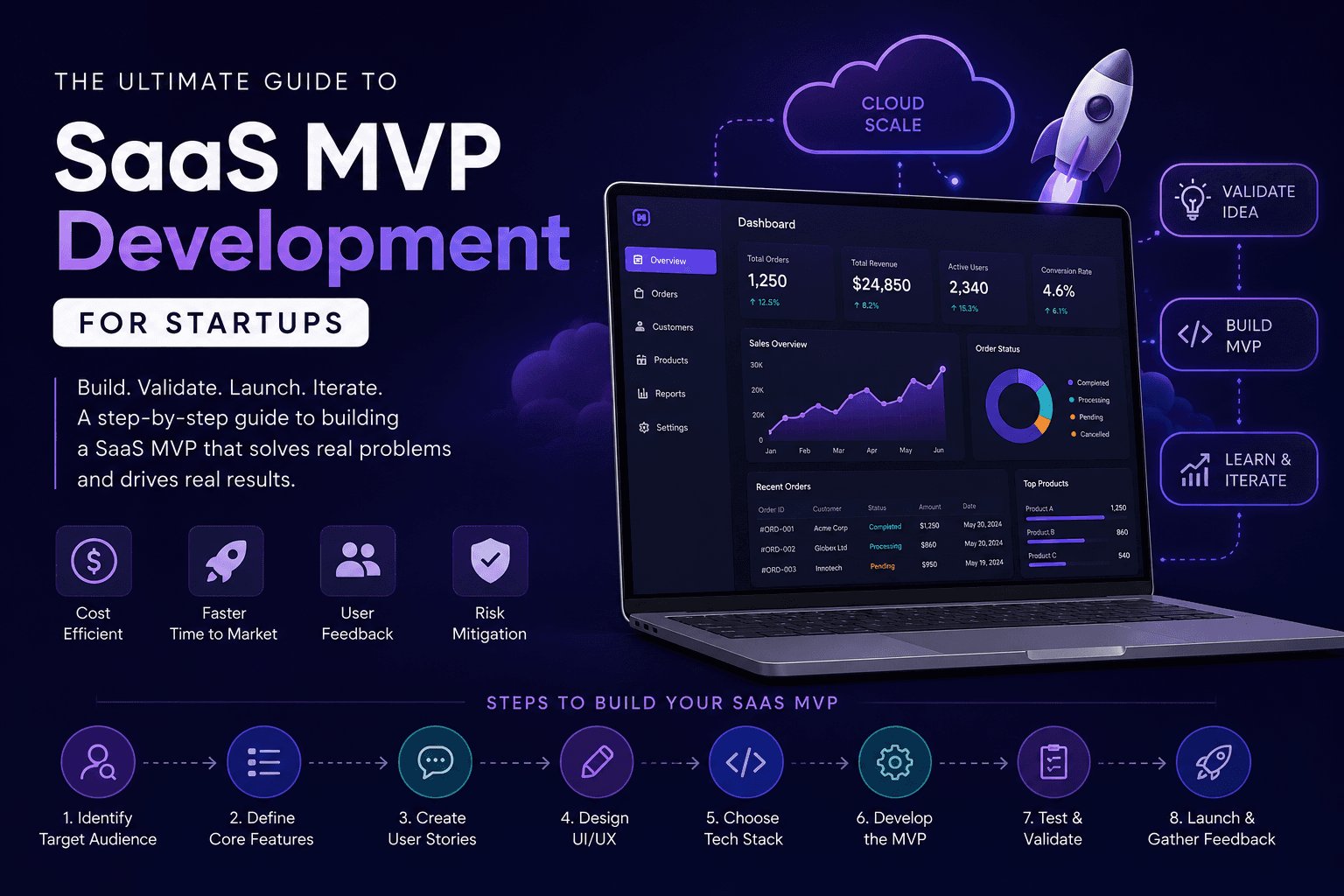
The Ultimate Guide to SaaS MVP Development for Startups
In the fast-paced world of technology, startups are constantly seeking ways to validate their ideas and bring their products to market efficiently. One effective approach is the development of a Minimum Viable Product (MVP), particularly within the Software as a Service (SaaS) model. This guide will walk you through the essential steps of SaaS MVP development, focusing on practical strategies and real-world applications.
What is a SaaS MVP?
A SaaS MVP is a simplified version of a software product that includes only the core features necessary to meet the needs of early adopters. The primary goal of an MVP is to validate assumptions about the product and gather user feedback without investing significant resources in full-scale development.
Why Develop a SaaS MVP?
- Cost Efficiency: Developing an MVP allows startups to minimize upfront costs by focusing on essential features.
- Faster Time to Market: An MVP can be developed and launched quickly, enabling startups to enter the market ahead of competitors.
- User Feedback: Early users provide valuable insights that can shape the product’s future development.
- Risk Mitigation: By validating the product idea early, startups can reduce the risk of building a product that does not meet market needs.
Steps to Develop a SaaS MVP
1. Identify Your Target Audience
Understanding your target audience is crucial for building a successful SaaS MVP. Conduct market research to identify potential users and their pain points. For example, if your target audience includes businesses in Order Management Systems, you should focus on their specific needs and challenges.
2. Define Core Features
Once you have a clear understanding of your audience, outline the core features that address their primary pain points. Use the following criteria to prioritize features:
- Must-Have: Essential features that solve the main problem.
- Nice-to-Have: Features that enhance user experience but are not critical for the MVP.
Example Core Features for an Order Management System MVP:
- User registration and authentication
- Order creation and management
- Basic reporting and analytics
3. Create User Stories
User stories help articulate the functionality from the user's perspective. They should be simple and focus on the value provided to the user. For instance:
- As a user, I want to create an order so that I can manage my inventory effectively.
4. Design the User Interface (UI)
A user-friendly interface is vital for user adoption. Focus on simplicity and clarity in your design. Tools like Figma or Sketch can help you create wireframes and prototypes.
5. Choose the Right Technology Stack
Selecting the appropriate technology stack is critical for the scalability and performance of your SaaS MVP. Consider the following:
- Frontend: React, Angular, or Vue.js
- Backend: Node.js, Ruby on Rails, or Django
- Database: PostgreSQL, MongoDB, or MySQL
6. Develop the MVP
With a clear plan in place, begin the development process. Use Agile methodologies to iterate quickly and incorporate feedback from stakeholders. Focus on building a functional product that can be tested by real users.
7. Test and Validate
Before launching your MVP, conduct thorough testing to identify and fix any bugs. Consider beta testing with a small group of users to gather feedback and make necessary adjustments.
8. Launch and Gather Feedback
Once your MVP is ready, launch it to your target audience. Encourage users to provide feedback, which is essential for future iterations. Use surveys, interviews, and analytics tools to gather insights.
Practical Business Examples
Example 1: Procurement Management Systems
A startup focusing on procurement management developed an MVP that included basic supplier management and order tracking features. By launching quickly, they received feedback that led to the addition of a budget tracking feature, significantly enhancing user satisfaction.
Example 2: Warehouse Management Systems (WMS)
Another startup in the WMS space created an MVP with core functionalities like inventory tracking and order fulfillment. User feedback highlighted the need for better reporting tools, which they prioritized in their next development cycle.
Common Challenges in SaaS MVP Development
- Feature Creep: Avoid the temptation to add too many features. Stick to your core functionalities.
- User Engagement: Ensuring users are engaged and providing feedback can be challenging. Consider incentives for early adopters.
- Technical Debt: Rapid development can lead to technical debt. Plan for refactoring and improvements post-launch.
Conclusion
Developing a SaaS MVP is a strategic approach for startups looking to validate their ideas and enter the market efficiently. By focusing on core features, gathering user feedback, and iterating based on real-world insights, you can create a product that meets the needs of your target audience.
At Xupyter Solutions, we understand the challenges of SaaS MVP development and can serve as your technical partner in navigating this process. Whether you need assistance with custom SaaS development or integrating AI automation into your workflows, we are here to help you succeed.
Frequently asked questions
Quick answers to common questions about this topic.